2025
Audius LaunchPad
Lead Designer: creation flow, onboarding, wallet connection, microcopy, educational content, purchase experience
Nobody knew exactly what this was supposed to be.
At various points, the Artist Coin Launchpad was going to be a fan club. Then a token. Then something else entirely. Leadership was figuring it out in real time, the product definition kept shifting, and big-name artists were already circling with interest. The backend infrastructure was being built. The opportunity was real. What didn't exist yet was a clear, trustworthy path through all of it for the artists who would actually use it.
That's where I came in.
I was brought onto the launchpad while Julian built out the surrounding ecosystem — coin pages, discovery, the basic mechanics of buying and selling. My job was the creation flow itself: the end-to-end experience that took an artist from curiosity to a live coin.
Learning tokenomics while designing for people who didn't know what tokenomics was
I'd been at Audius for two years by this point, mostly doing artist-facing feature work and design systems. Crypto-adjacent stuff — rewards, staking mechanics, wallet infrastructure — had largely been Julian's territory. This project pulled me into the deep end.
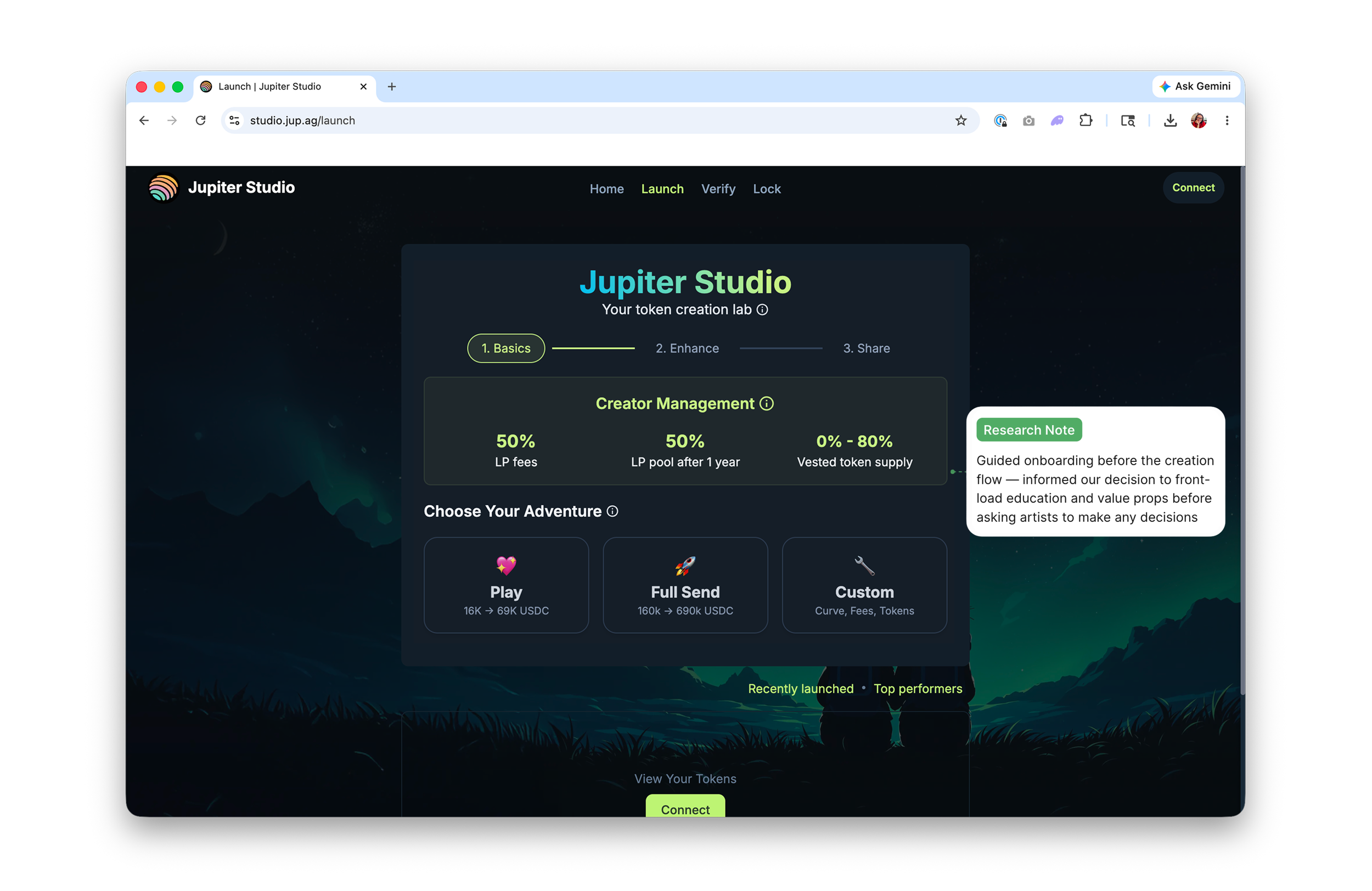
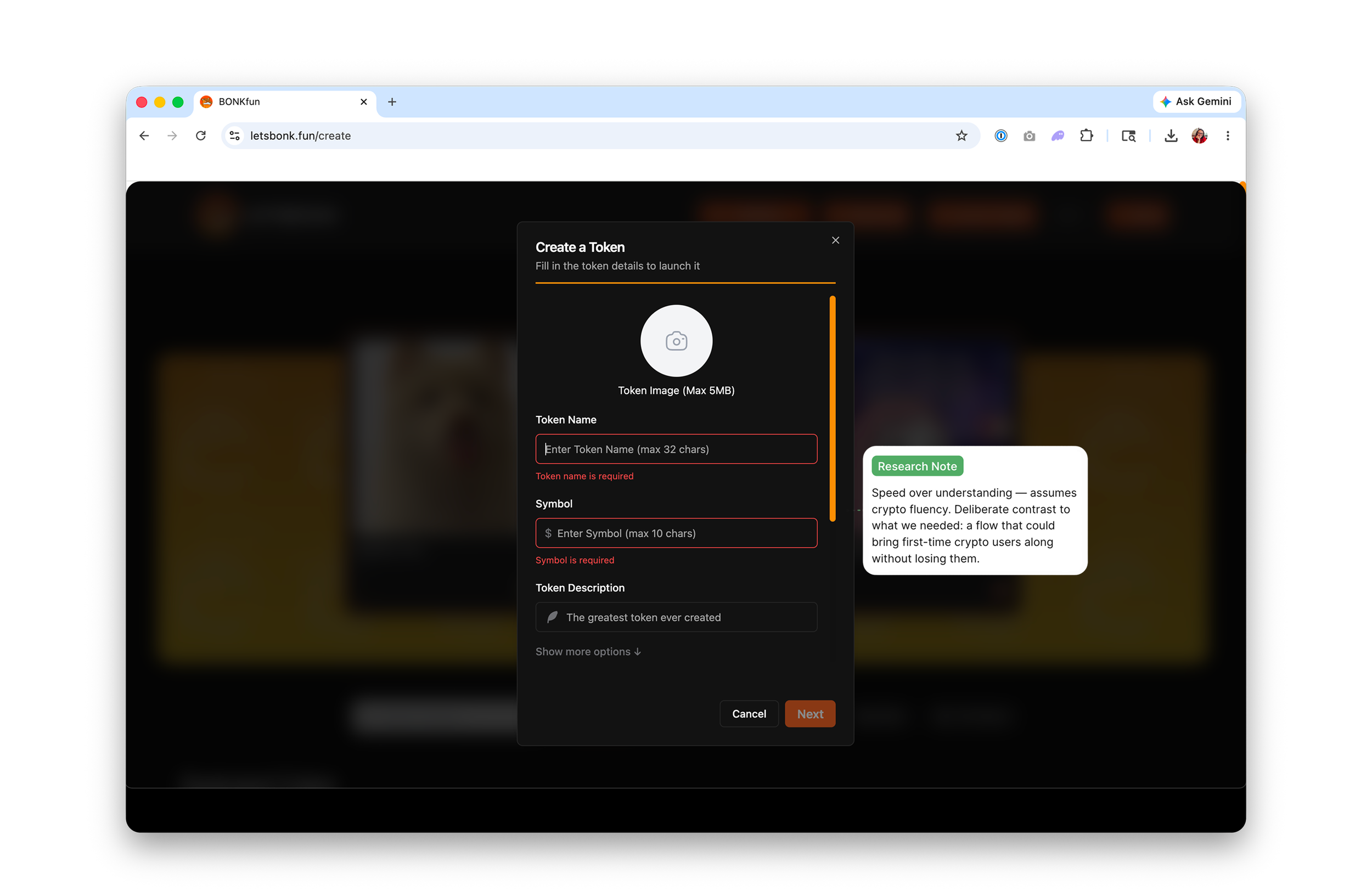
I met with our resident crypto expert and walked through several existing launchpads. I studied Jupiter, Zora, Raydium, LetsBonk, Pump.fun — not to copy them but to understand where they built trust and where they lost people. I was learning about gas fees, on-chain minting, how AUDIO-backed coins tied each artist to the Audius ecosystem, how a Solana purchase had to be converted to AUDIO before the coin could be bought. Marcus, our backend engineer, was handling the transaction infrastructure. I was trying to understand it well enough to explain it to someone who'd never heard any of it.
The challenge was that I was learning the same things the artists would be learning — just a few weeks earlier. That turned out to be an asset. If something confused me, it was going to confuse them.
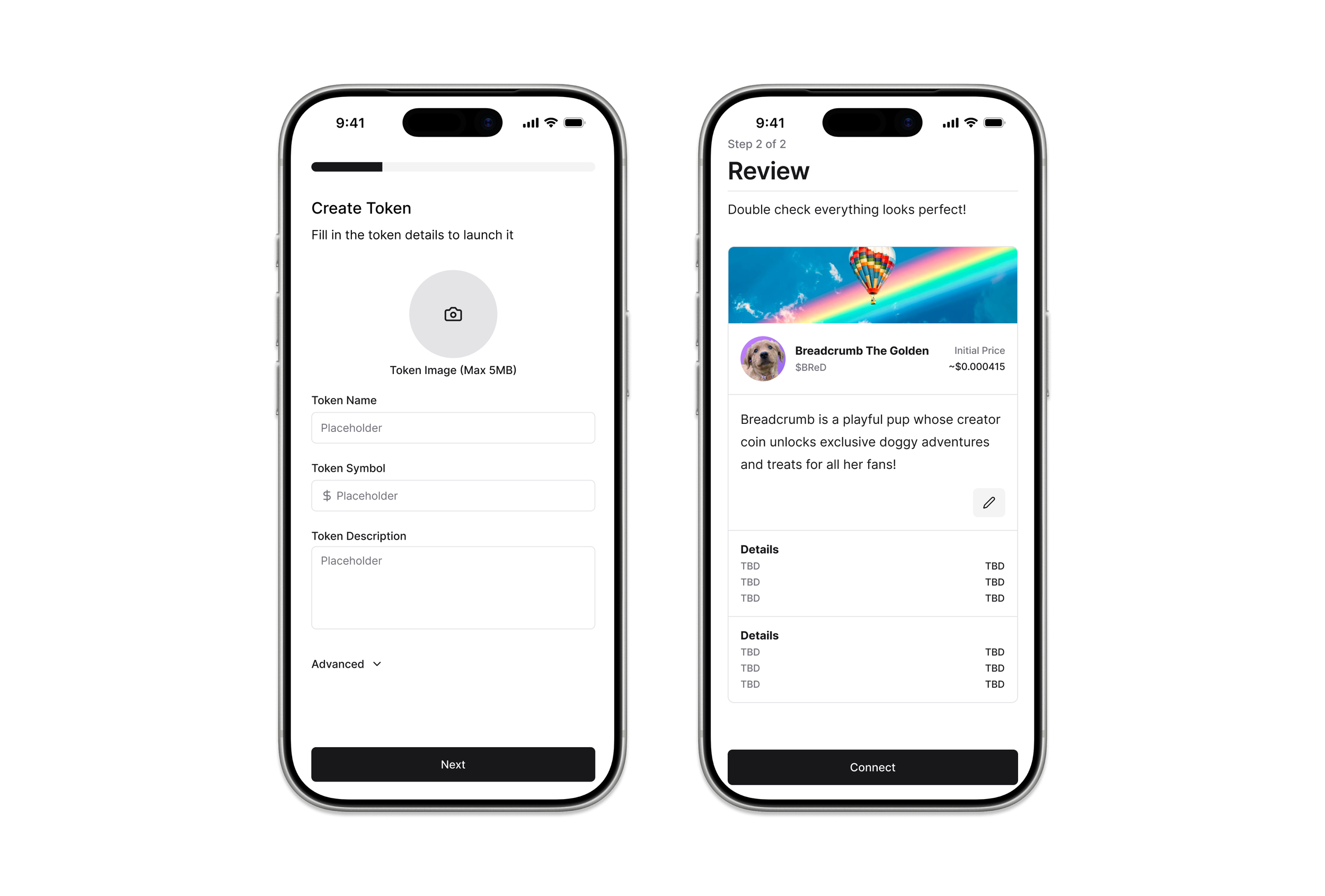
Early wireframes
The problem nobody caught until we watched someone go through it
We had beta artists — real people with real audiences who were excited to launch. Before opening it up publicly we watched them go through the flow. That's where the first big issue became obvious.
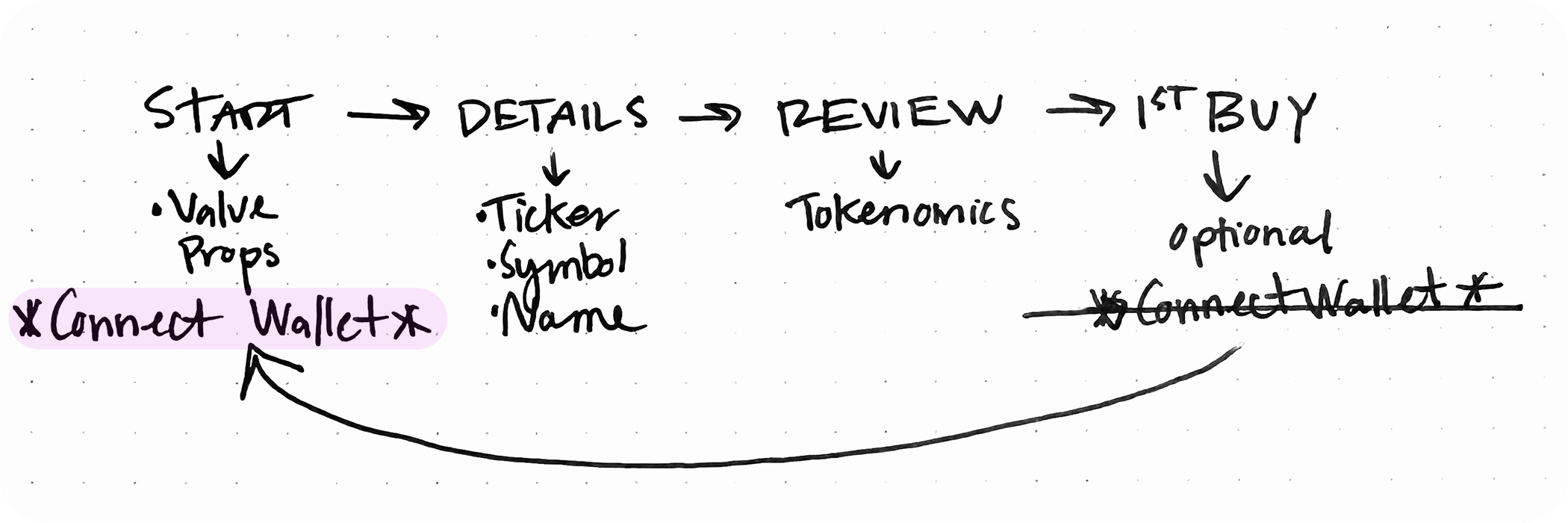
In the original design, artists connected their external wallet near the end of the flow — just before the purchase step. The logic made sense at the time: let them make their creative decisions first, then ask for the wallet when it's actually needed.
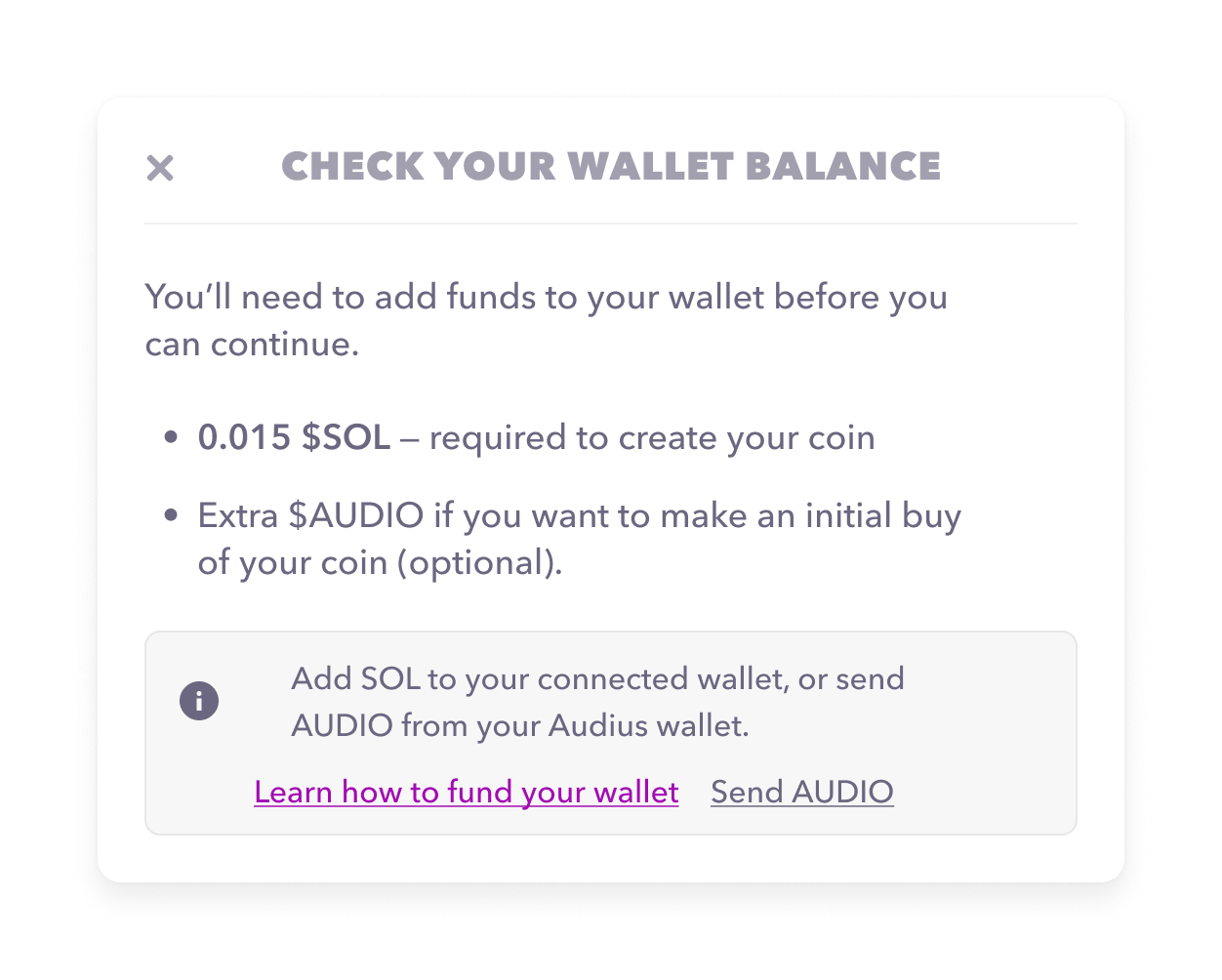
The problem was what happened when the wallet check failed. By the time an artist hit that step, they'd already chosen a coin name, a symbol, a brand. They were emotionally invested. And then they discovered they didn't have enough Solana in their wallet to mint. To continue, they'd have to leave the flow, move funds, top up a wallet, and hope they could find their way back. We were trapping people at the worst possible moment.
The fix was straightforward once we saw it: move the wallet connection to the very beginning. Check for sufficient Solana before anything else. Surface the problem before the artist has invested anything — not after. Light friction up front. No surprises later.


The education problem: explaining things nobody wanted to stop and read
One of the earliest decisions I pushed for was adding an education layer before the creation flow started. We were asking artists to make permanent, irreversible decisions about tokenomics, market caps, fee splits, and vesting schedules. Most of them had never heard these terms.
The instinct from the team was to get people into the flow as fast as possible. My instinct was that launching a coin without understanding what you were launching was going to create a different kind of problem — confusion, regret, support tickets. We needed to front-load enough context that artists felt informed without overwhelming them before they'd even started.
I designed an introductory section that explained what a coin was, why fans might want to buy it, how artists could earn trading fees, and what they needed to have ready to proceed. Plain language. No jargon where we could avoid it.

The review screen: the most important and most confusing part
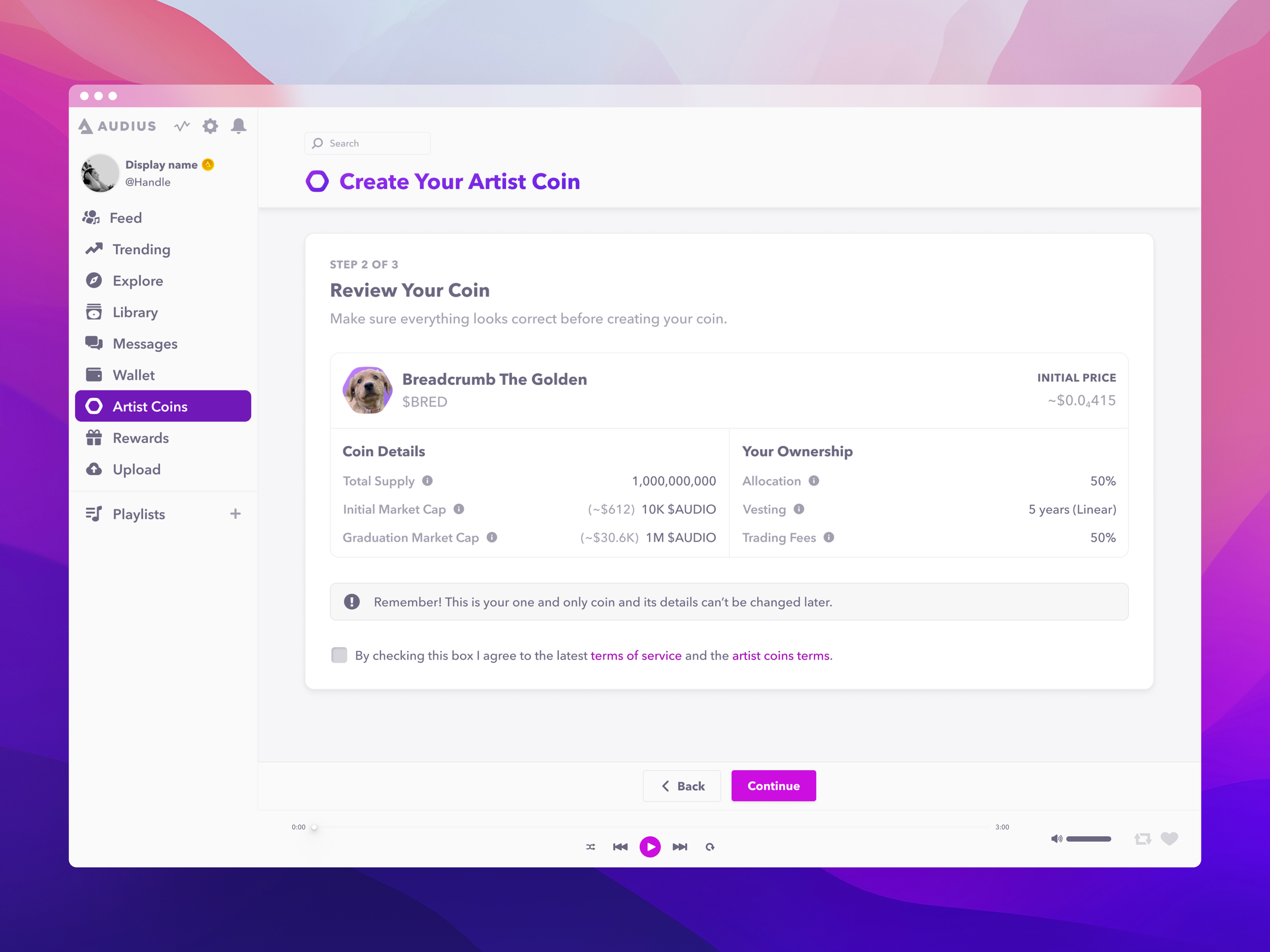
The review step was where everything came together — and where the cognitive load peaked. Artists were looking at total supply, market caps denominated in AUDIO, fee splits, and a 50% artist allocation vesting linearly over five years. This was unavoidable. It had to be there. Our job was to make it as clear as possible.
We used clear labels, contextual tooltips for deeper learning, and a required confirmation checkbox agreeing to the Artist Coin Terms. The checkbox wasn't just legal cover — it was a forcing function to slow down and actually read what they were agreeing to. Coin creation is permanent. We wanted that to land.
Watching the moment it broke
The post-launch pivot came from watching video recordings of beta artists going through the flow.
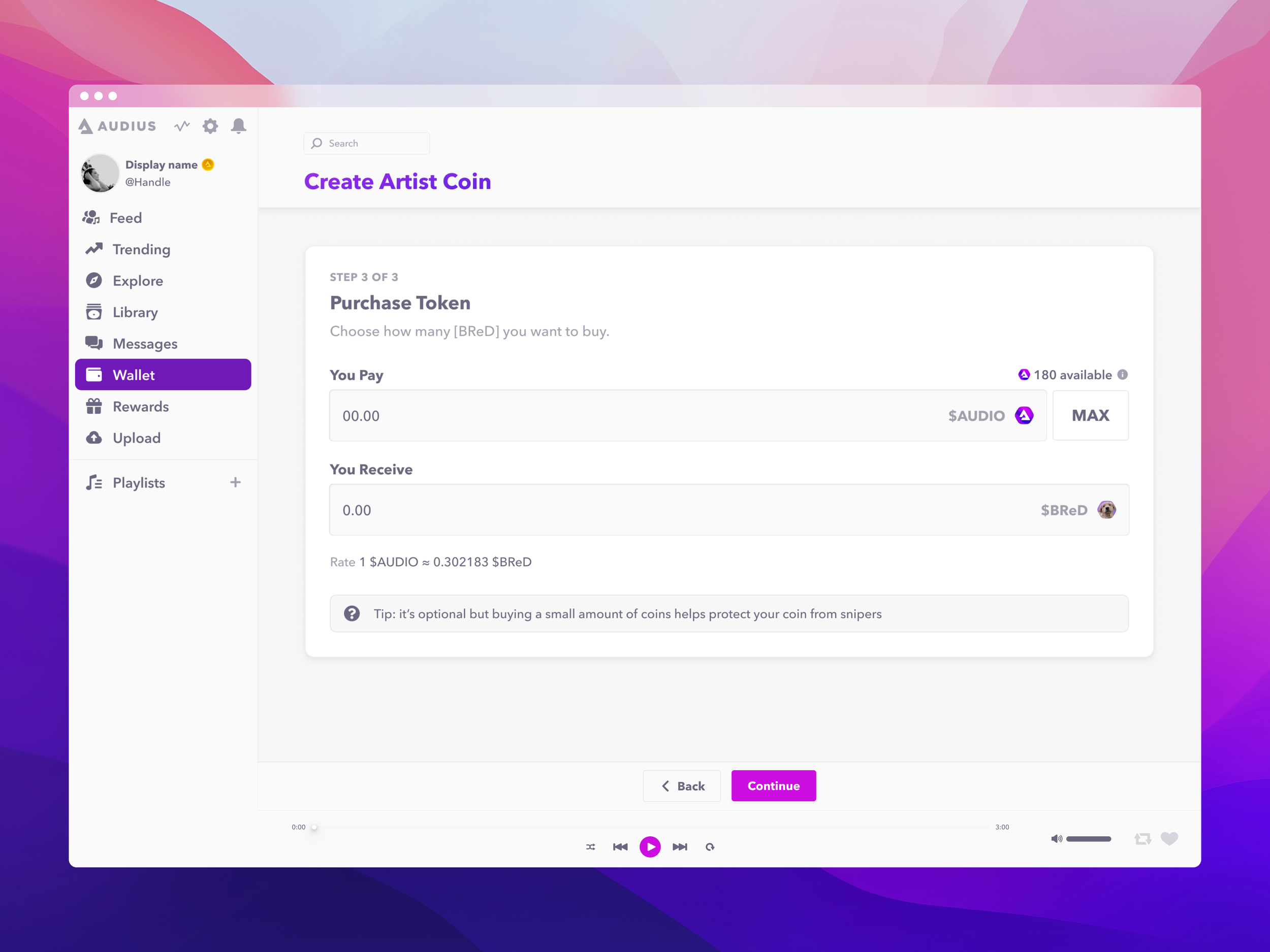
One artist — launching what he'd decided to call his Yak Coin — was a perfect example. He moved through the early steps with pure excitement. Coin name, coin symbol, dragging in his artwork. Next step, next step, let's go. Then he hit the review page, nodded along, hit continue — and landed on the first purchase screen.
The energy shifted immediately. What is this? I thought I was done. What do I need to do here?
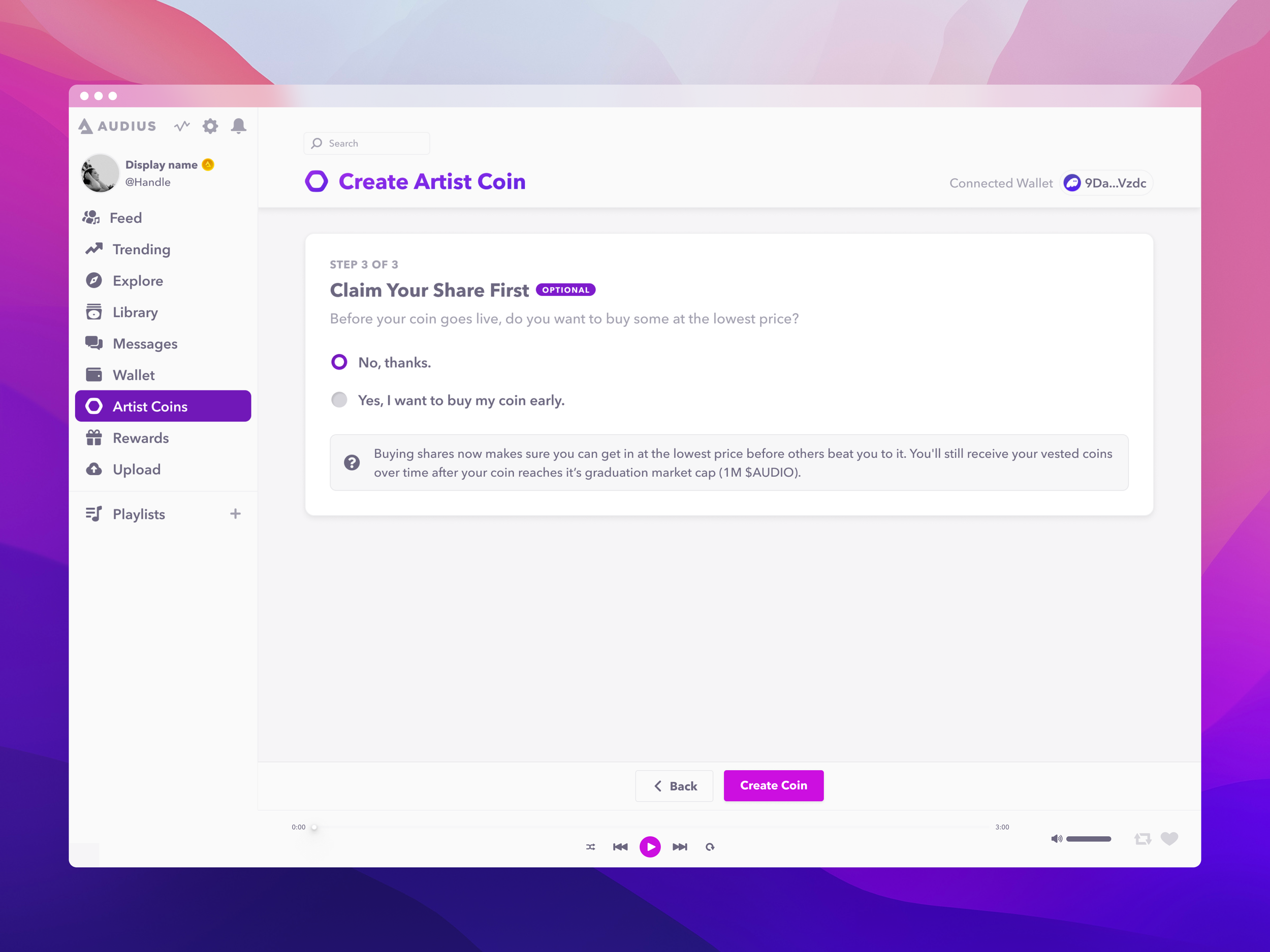
He wasn't confused because the screen was poorly designed. He was confused because nothing had told him this step was coming, and nothing had made clear it was optional. He'd assumed the flow was over. We'd put a purchase decision in front of someone who thought they were just confirming a launch.
The fix was a radio button, defaulted to No. A simple, explicit choice: do you want to buy a portion of your coin now, or skip this and launch? The optional nature of the step became immediately obvious. Artists who didn't have $AUDIO could still complete the flow. Artists who wanted to buy in early still could.
What shipped
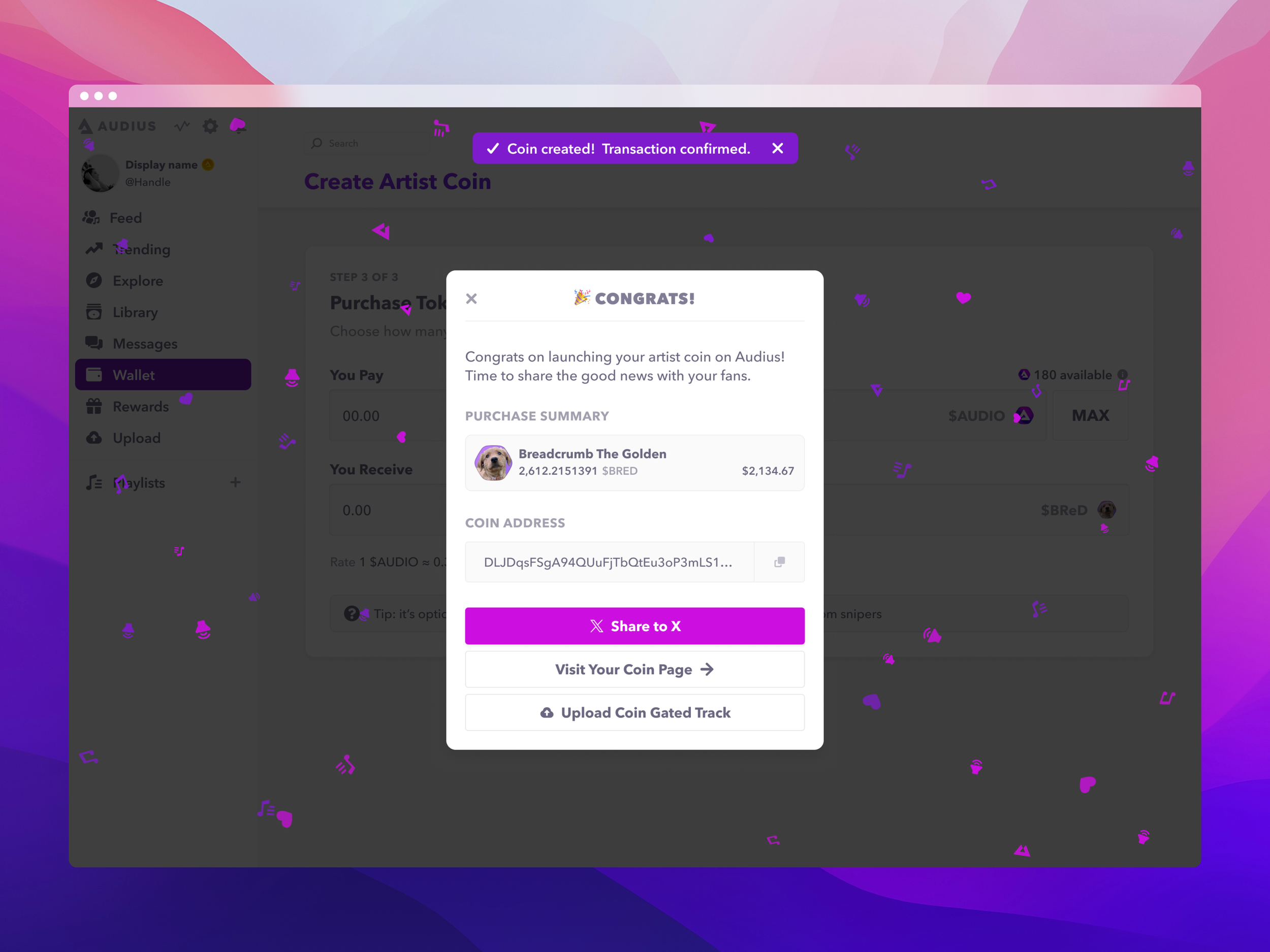
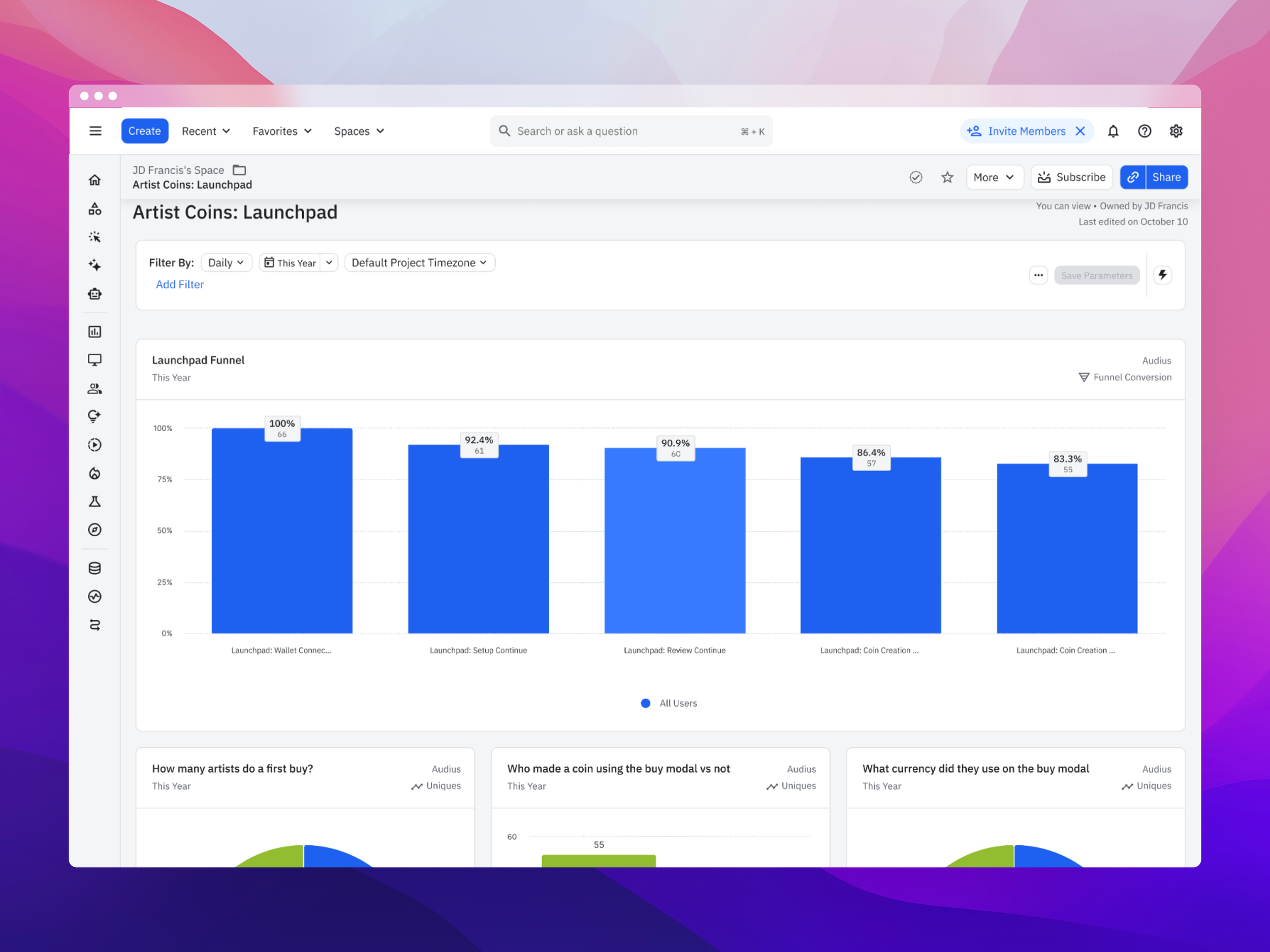
83% of artists completed the full creation flow. Nearly 70% made a first purchase. In user testing with 13 Audius power users, most rated the flow four or five on a difficulty scale — approachable even for people with no crypto background.
The feedback also pointed to what came next: clearer in-flow education around market cap and the graduation process, and more tools for artists to communicate value to their fans before promoting their coin. The launchpad worked. It also showed us exactly where to go deeper.