October 2025
Audius Artist Coin Launchpad
Lead Product Designer
Feature Summary
When Audius began exploring an Artist Coin Launchpad, the momentum was already there. Several major artists were curious about launching tokens with us, and a huge amount of backend infrastructure was already in motion. What we did not have yet was a clear, trustworthy, artist-friendly path through all of that complexity. Tokenomics, market caps, liquidity, and wallet mechanics are not easy subjects. I needed to turn all of it into something simple, reliable, and meaningful for artists.
I was the lead designer for the creation flow. I shaped the end-to-end experience from the first educational touchpoint to the final transaction.
My Role
Led the design for the Artist Coin creation flow from onboarding to launch
Created user flows, wireframes, and high-fidelity designs
Wrote educational and transactional microcopy
Designed the wallet and purchase experience, including AUDIO top-ups and transfers
Collaborated with another designer on the surrounding interface
Partnered with product and engineering to align the UX with on-chain logic
Research & Wireframing
Before I created anything, I had to learn how token creation actually worked. I needed enough understanding of tokenomics to simplify the experience without misrepresenting what was happening behind the scenes.
I spent time studying how other successful launchpads approached similar moments. Jupiter was the clearest reference point, as well as Zora, Raydium, LetsBonk, and Pump.fun. I wanted to understand why their experiences worked, where they built trust, and how they guided people through moments that are usually confusing.
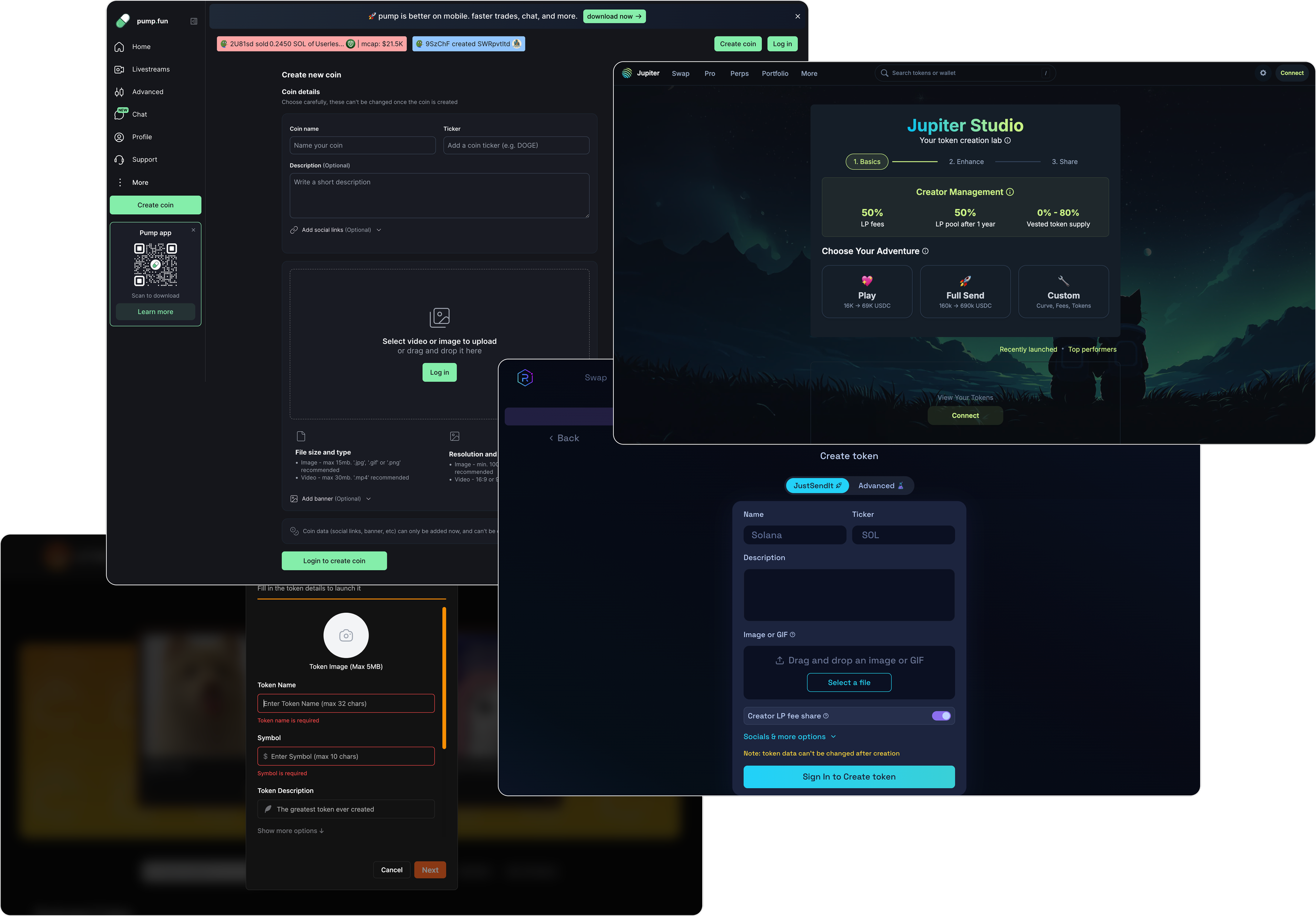
That combination of foundational learning and pattern research helped me figure out what to borrow, what to avoid, and how to create something that felt clear and reliable for artists stepping into this world for the first time. From there, I created wireframes that I felt would be a good skeleton before diving into something more high fidelity using our Harmony Design System.
Designing for a Non-Crypto Audience
With the basics in place, my goal was to introduce Artist Coins in a way that felt friendly and clear. I wanted the beginning of the to flow explain what a coin was, why fans might want to buy it, and how artists could earn trading fees..
While working on the first step of the flow, we hit an unexpected blocker.
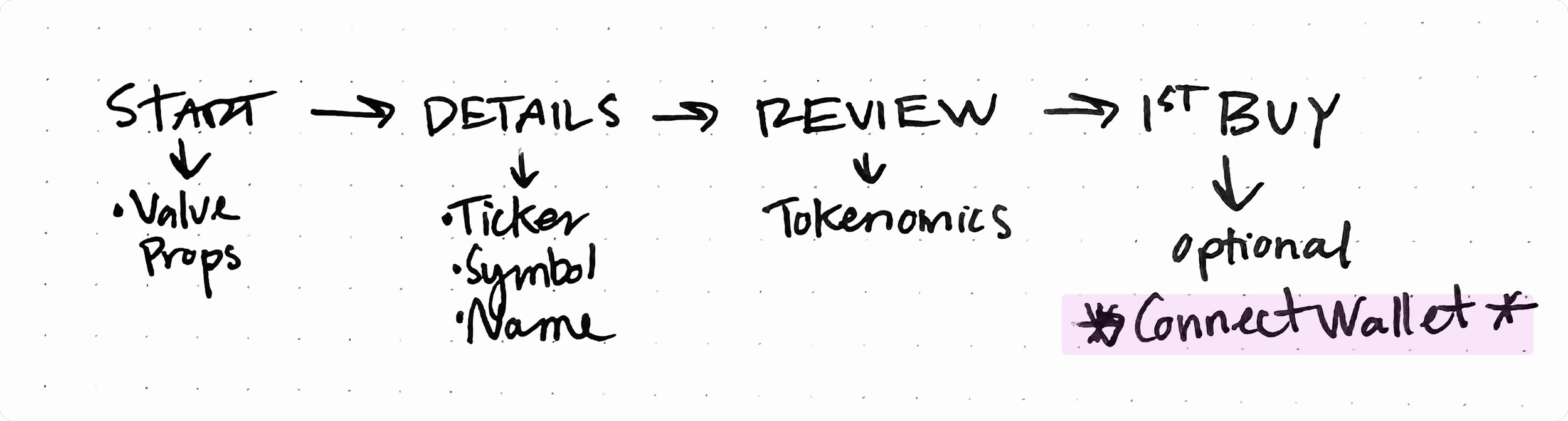
In the first version of the flow, artists connected their wallet near the end, shortly before the purchase step. It seemed logical at the time. They would make their creative choices first, then connect their wallet once it was actually needed.
The problem became obvious as soon as we mapped the real behavior. By the time an artist reached the wallet connection step, they had already invested in their coin. They had chosen a name, a symbol, and branding. That was the moment they learned they did not have enough Solana in their external wallet to mint a coin at all. To proceed, they would have to leave the flow, move funds around, refill a wallet, and then hope they could find their way back. It was confusing and it created a major drop-off risk.
This was not just an inconvenience. It was a broken moment that trapped users after they had already committed emotionally and creatively. We needed to fix it.
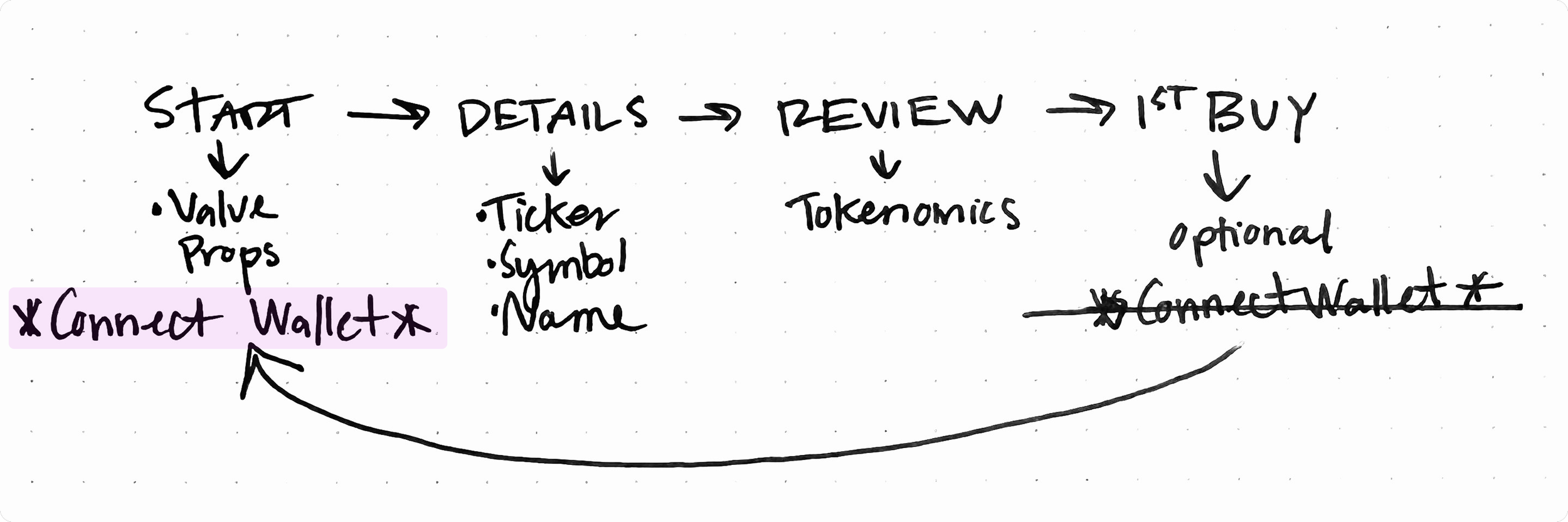
Connecting the external wallet at the start
We made a major shift. Instead of connecting the wallet near the end, we required it at the very beginning. When an artist connected their external wallet, the backend immediately checked for one thing: whether the wallet had enough Solana to mint a coin. We did not require AUDIO yet, because the purchase step came later and was optional.
If the wallet did not have the required Solana, we surfaced that information with a simple modal and paused the flow. This introduced light friction up front, but it prevented artists from getting blocked halfway through a process they had already invested time in. Once the wallet check passed, the rest of the flow could move smoothly, without surprises.
This shift created a more stable foundation for everything that followed.
The Basic Flow: Create & Review
With wallet connection and value props front-loaded, the core Artist Coin Launchpad flow was intentionally simple: Create and Review.
In the Create step, artists chose a coin name, symbol, and image. We deliberately removed requirements like a custom description or cover photo at launch. Instead, we generated a standardized on-chain description for all Artist Coins created through Audius. This ensured consistency across launchpads and allowed any external link to reliably redirect back to the official coin page on Audius. Richer customization was treated as a fast follow, giving artists the option to add a description and cover photo after launch once their coin was live.
Because coin creation is permanent, clarity and confirmation were critical. We added explicit language and a required checkbox to confirm that:
this was the artist’s one and only coin, and
key details could not be changed once created.
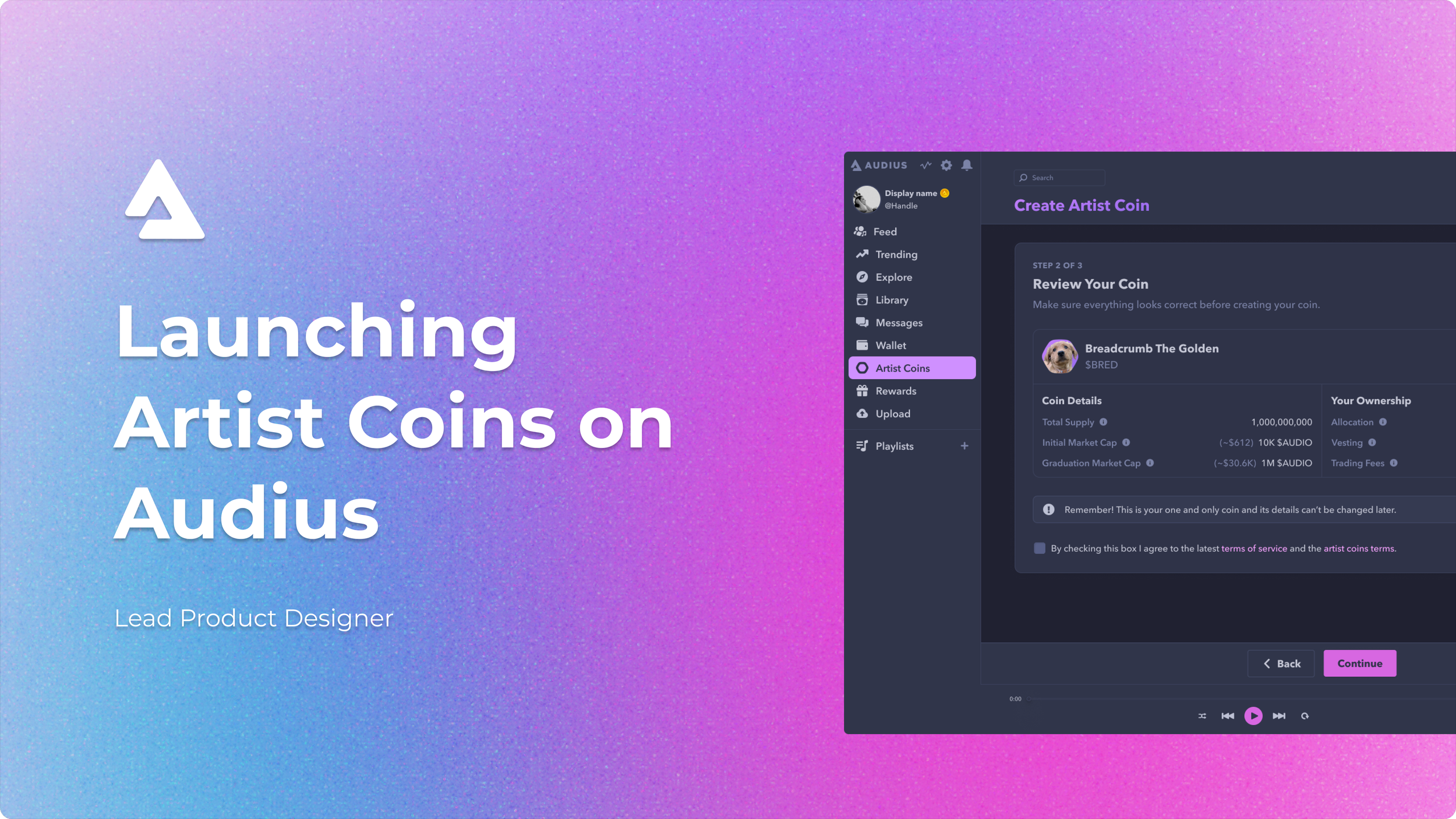
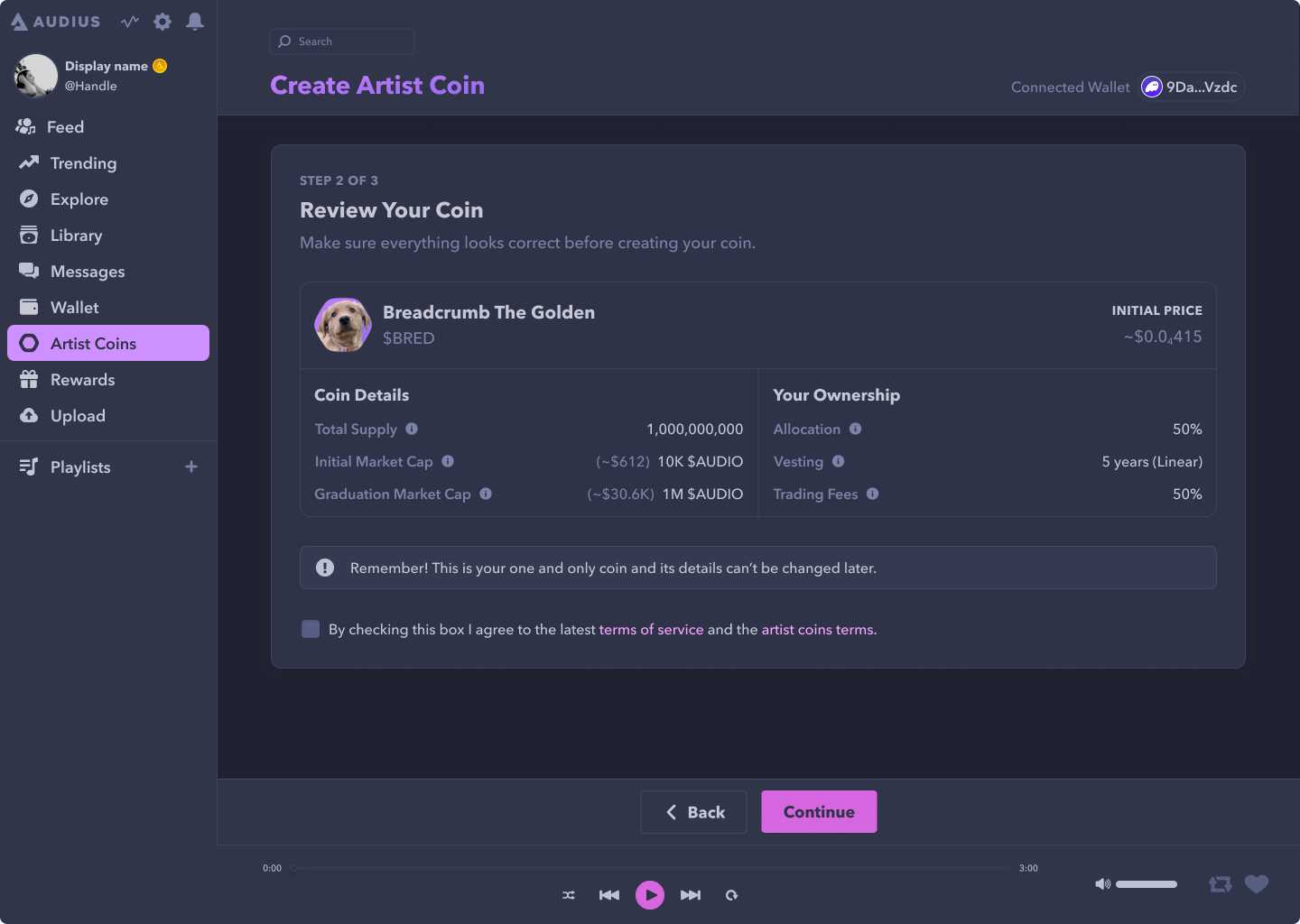
After entering their details, artists moved into the Review step. This was the most complex part of the flow, especially for artists unfamiliar with crypto, but it was essential for clearly communicating the Launchpad’s tokenomics. On this screen, artists reviewed:
total supply and market caps (all denominated in AUDIO),
fee splits, and
a 50% artist allocation vesting linearly over five years.
To reduce cognitive load, we paired this information with clear labels, contextual tooltips for deeper learning, and a final confirmation checkbox agreeing to the Artist Coin Terms and Terms of Service.
Together, these steps balanced simplicity with trust, ensuring artists felt confident, informed, and in control before launching their coin.
The Biggest UX Challenging: The 1st Buy
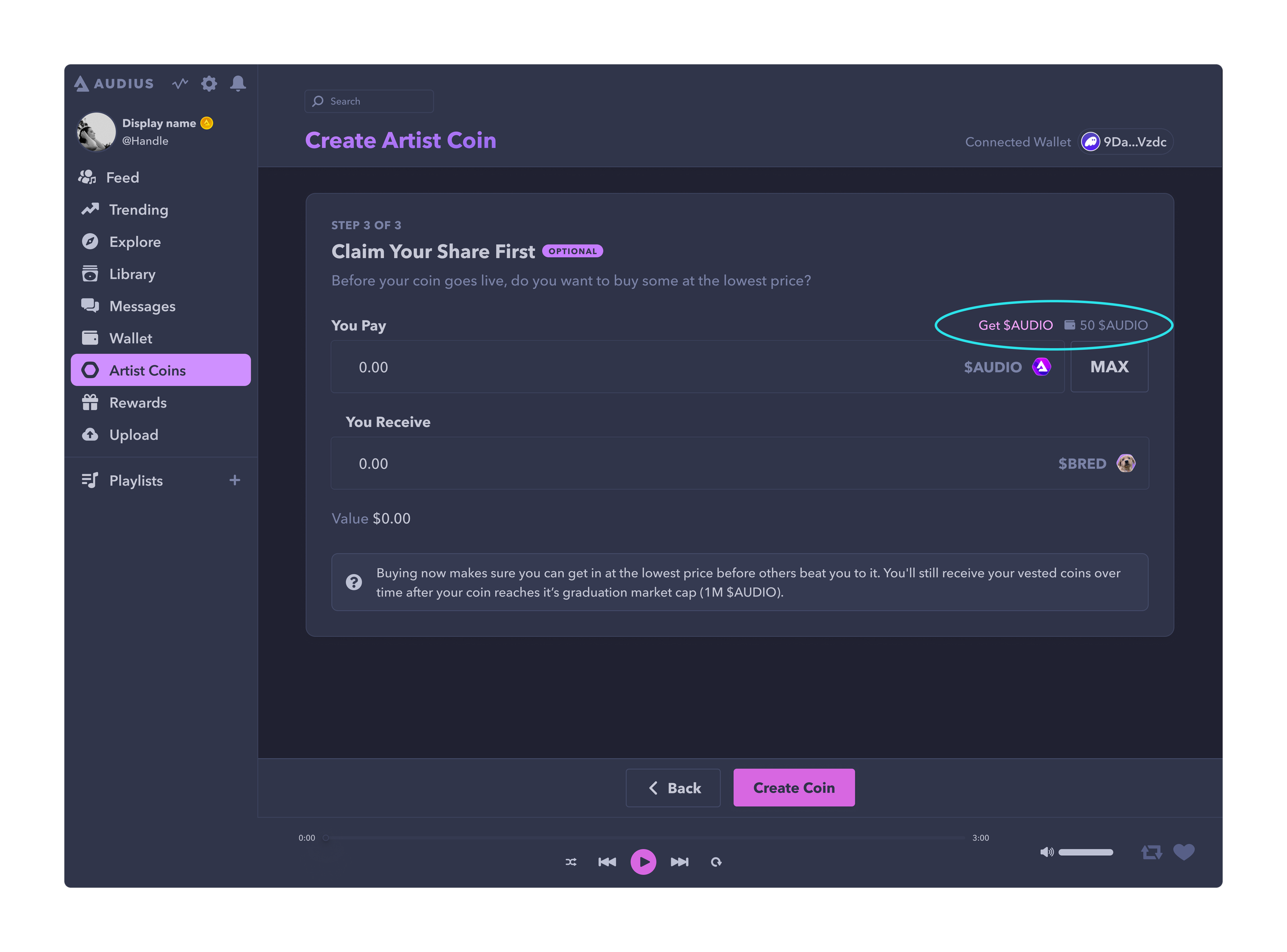
After solving the early blocker, the next major challenge was the purchase step. Artists launching a coin can buy a portion at the lowest price, which gives them early ownership and aligns incentives long term. But to make that purchase, they needed AUDIO in their connected external wallet.
Originally, we considered allowing them to pay with Solana since many users already had it. But every Artist Coin is backed by AUDIO on the backend. If someone paid with Solana, the system would have to automatically convert SOL into AUDIO before minting the coin. That created unnecessary risk, more steps, and more chances for errors.
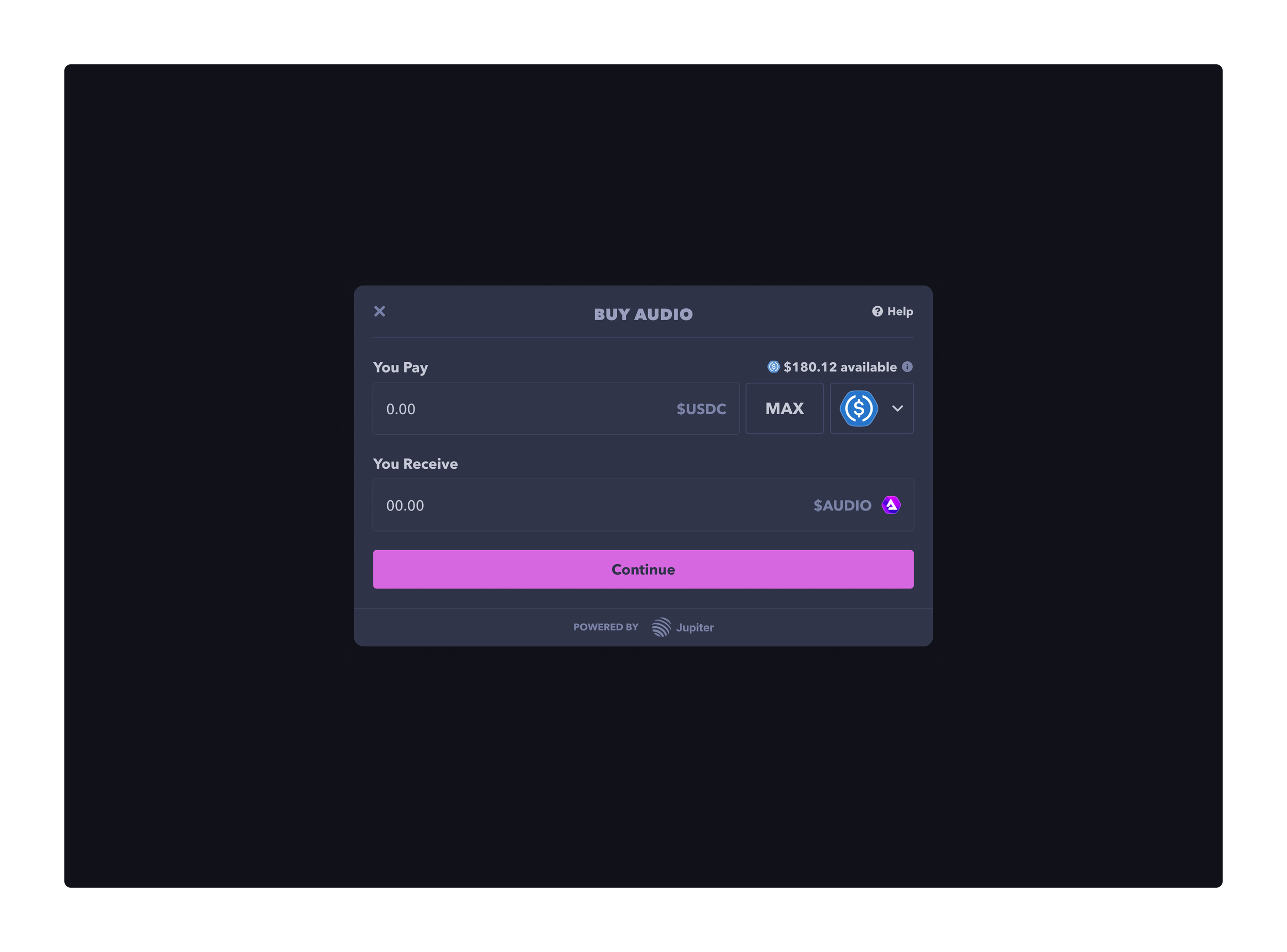
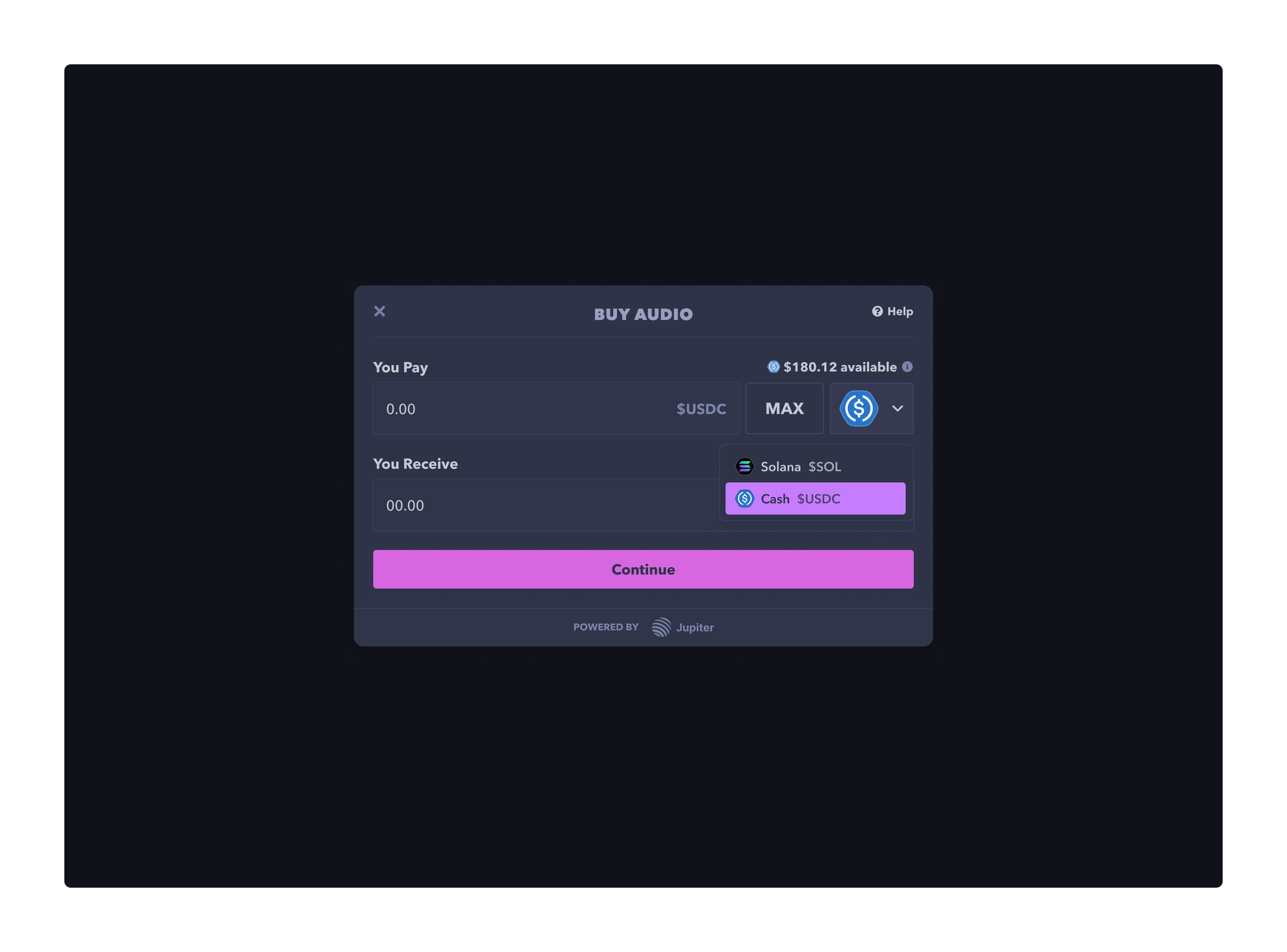
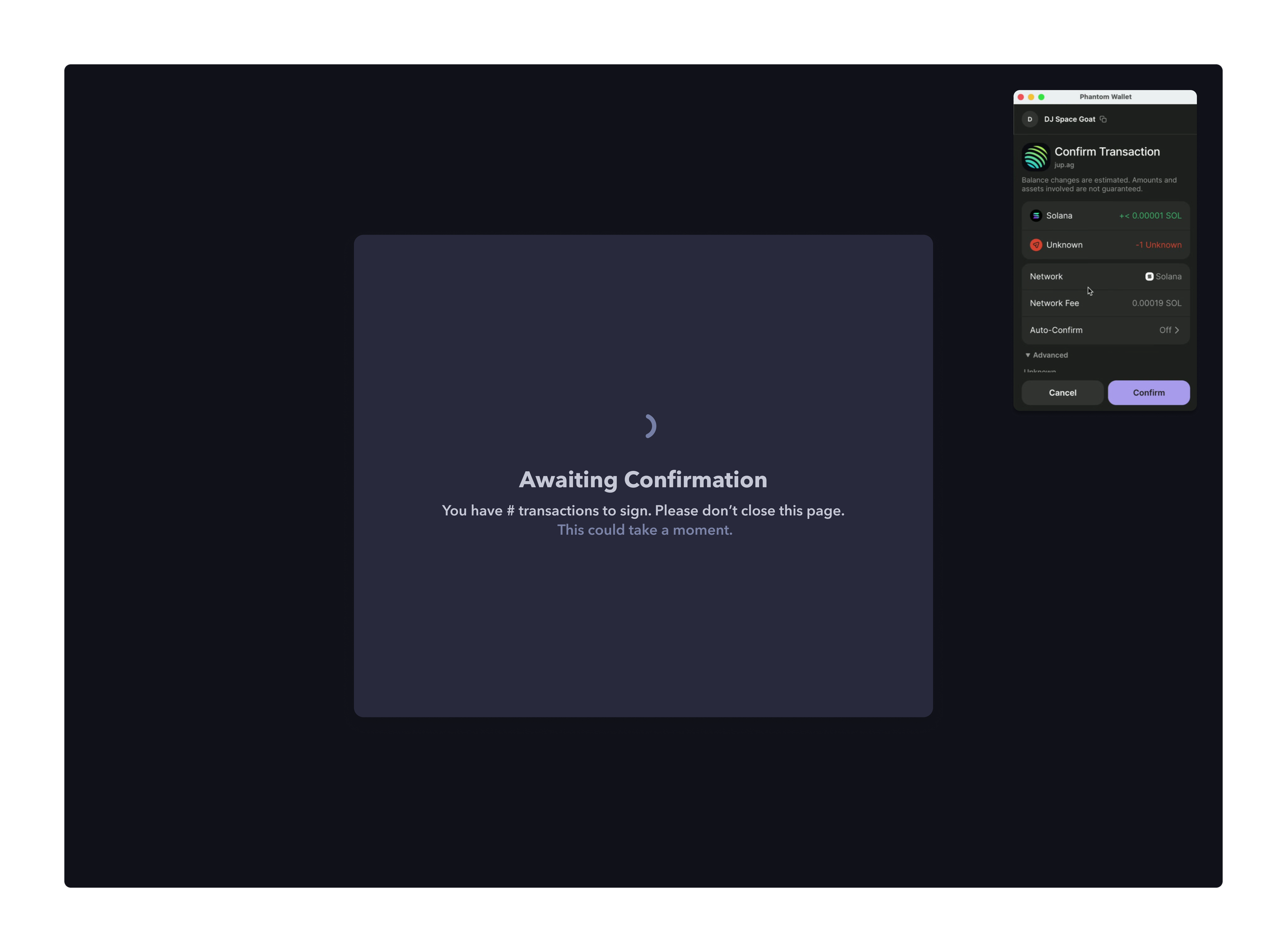
We decided instead to let artists acquire AUDIO during the flow. They could buy it, or they could transfer it from their internal Audius wallet to their external wallet. Designing this step required clear microcopy, careful error handling, and thoughtful transaction feedback. It was the most technical part of the entire experience and the part where good design mattered most.
Launching with confidence
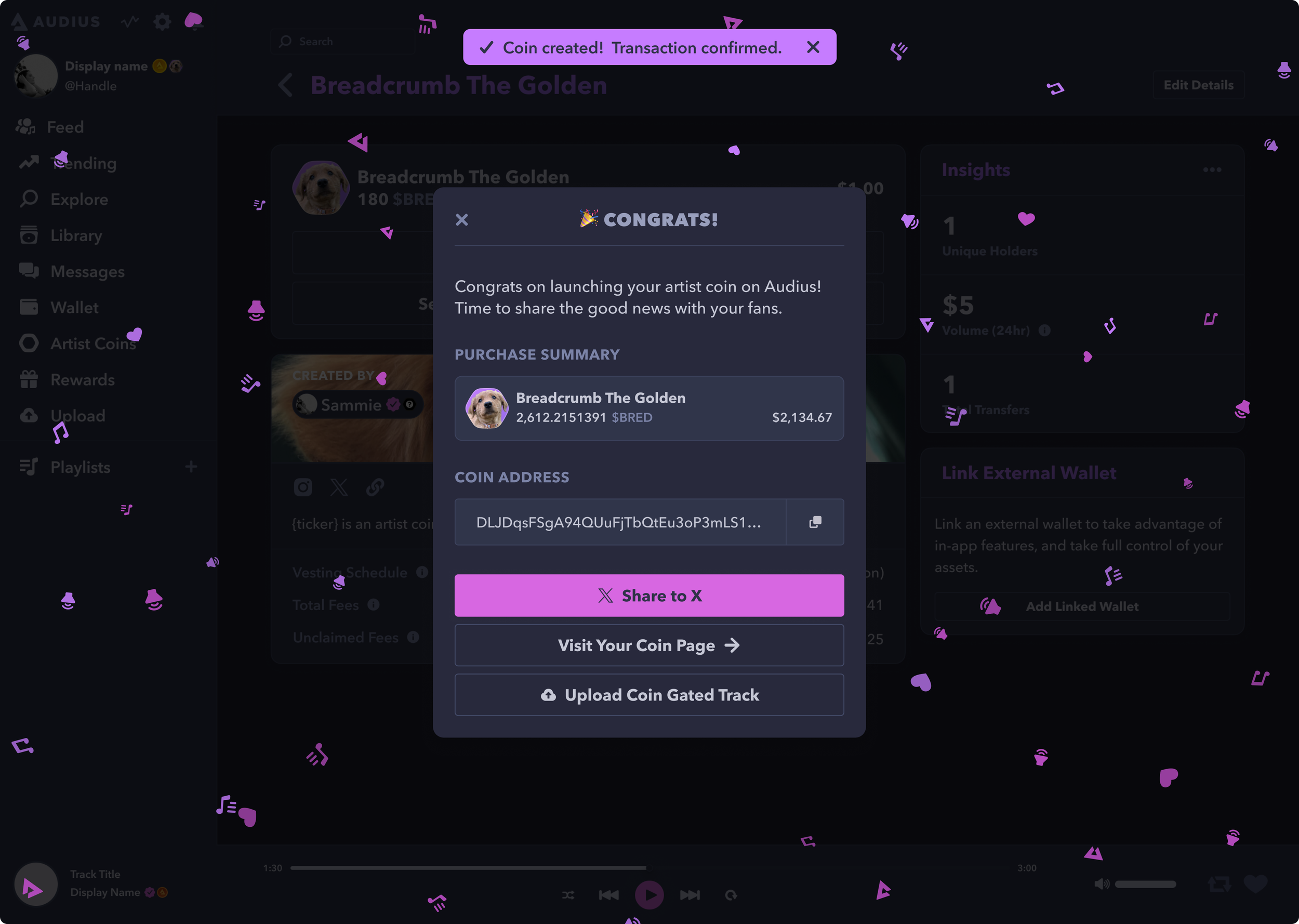
Once the purchase step was complete, the final steps were straightforward. Artists confirmed their choices, signed the transaction, and watched their coin go live.
Despite the complexity under the hood, the flow itself felt calm and supportive.
Artist Feedback
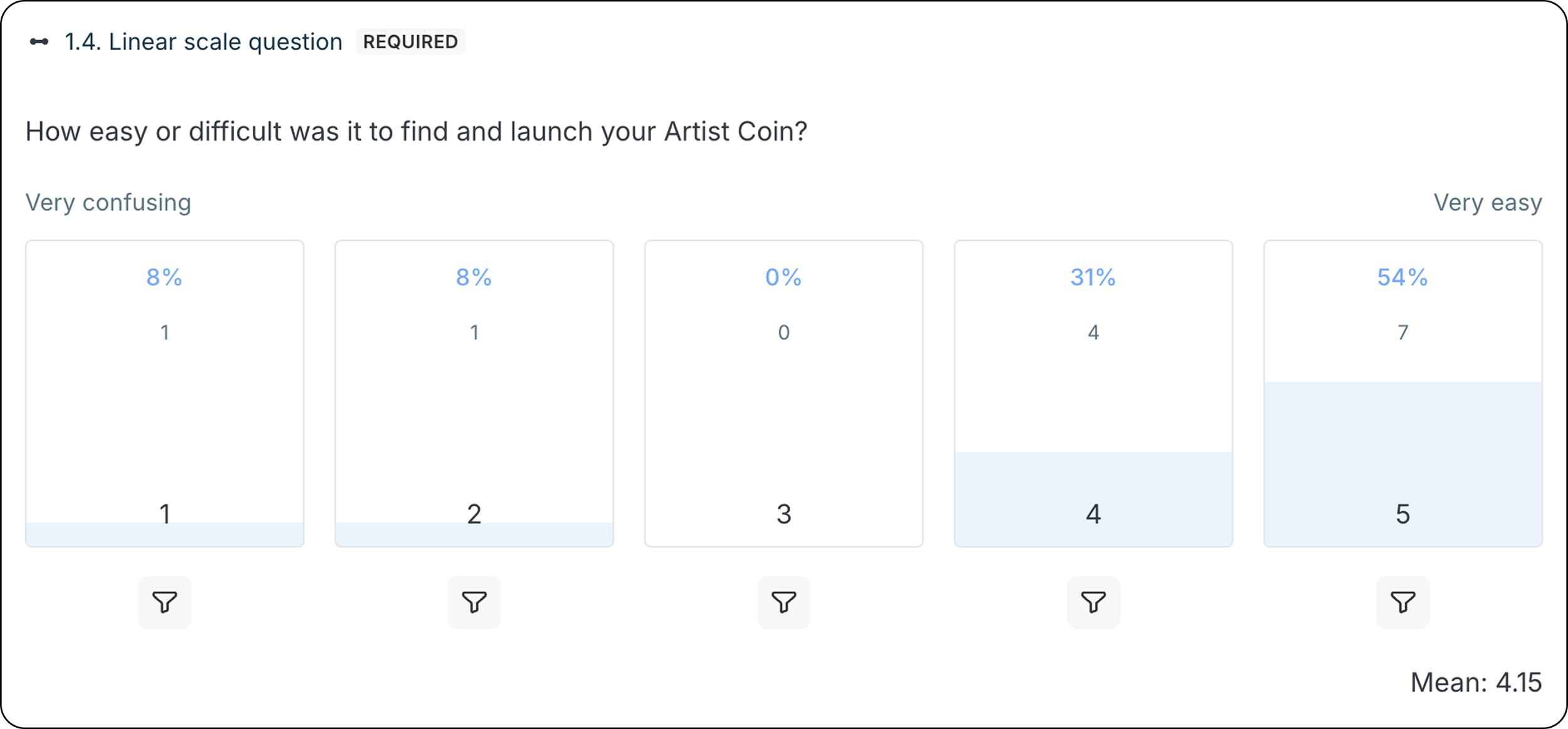
We tested the flow with 13 Audius power users to validate clarity and uncover friction points. Overall, artists found the experience easy to navigate, with most rating it a four or five on the difficulty scale. The step-by-step structure made the process feel approachable even for users who were not familiar with crypto.
Key insights from the survey:
Several artists were unsure about terms like market cap and graduation process, signaling a need for clearer in-flow education.
Some users were confused about when AUDIO or Solana were required, which confirmed the value of moving the wallet check to the beginning.
Technical blockers were rare. One user reported crashes, most experienced none.
Fan reactions were largely positive, with listeners expressing curiosity and excitement.
Artists wanted more ways to reward holders and more tools for communicating value before promoting their coin further.
These insights confirmed the core flow felt intuitive while highlighting where additional clarity and future features would strengthen the overall experience.
Post-Launch Pivot
After launching the first iteration of the Artist Coin Launchpad, we received feedback that it wasn’t clear the “first buy” step was optional. Some artists assumed they were required to purchase their own coin in order to complete the flow. To address this, we introduced a clear radio-button choice, defaulted to “No,” with an explicit option to buy the coin early if desired.
This change made the optional nature of the step immediately obvious and reduced anxiety around upfront costs. It also allowed artists to complete the flow with only enough Solana to mint their coin, rather than needing additional funds to purchase AUDIO to buy their coin. As a result, artists could successfully create a coin even if they only had Solana in their wallet, while still preserving the option for early purchase when it made sense for them.
Final Thoughts
This project pushed me into unfamiliar territory in the best way. Turning a complex token system into something simple and artist friendly required patience, curiosity, and close collaboration across teams. It ended up being one of my favorite projects at Audius because I could see how much clarity and confidence a well-designed flow could give creators stepping into crypto for the first time.